
Why Limobook Switches to Winter Tires Every Year (Even in Vancouver)
Every fall, Limobook takes every vehicle in our fleet off its regular tires and puts it on the best dedicated snow tires we can buy. Plenty of Vancouver companies skip that step and run all-seasons all year. Here's why we don't, and the surprisingly cool science behind it.
Vancouver winters are tricky
Some years downtown barely sees a snowflake. Other years a storm rolls in overnight and the city grinds to a halt. Most of the time it's just cold, wet and dark, which is exactly when a tire's grip matters most.
And our day doesn't stay in the city. We drive the Sea-to-Sky Highway to Whistler constantly, often early in the morning or late at night. It can be raining at YVR and snowing at Squamish an hour later. We'd rather be ready for that every single trip than hope the forecast is right.
What the law allows vs. what we choose
From October 1 to March 31, winter tires are required on the Sea-to-Sky Highway and most BC highways outside the Lower Mainland, with some mountain routes extended to April 30. Driving those routes without them can mean a $121 fine and being turned around. (CBC)
Under BC law, a tire counts as a winter tire if it carries either of two markings on the sidewall, with at least 3.5 mm of tread left:
M+S (mud and snow): the legal minimum. Many all-season tires carry it.
Three-peak mountain and snowflake: tested to a severe-snow standard, and the one the province itself says gives the best traction on snow and ice. (Castanet)
An M+S all-season keeps a company legal. We don't think legal is the same as safe, so every Limobook vehicle runs true mountain-snowflake winter tires for the season.
The science: it's not really about snow
The biggest difference between a winter tire and an all-season has nothing to do with snow. It's temperature.
The 7°C rule. Rubber behaves differently in the cold. Below about 7°C, the compound in an all-season tire starts to stiffen and lose grip, a bit like a hockey puck. Winter tires use a softer blend, with more natural rubber, silica, oils and resins, that stays flexible well below freezing. So even on a cold, wet, snow-free Vancouver morning, a winter tire grips the road better.
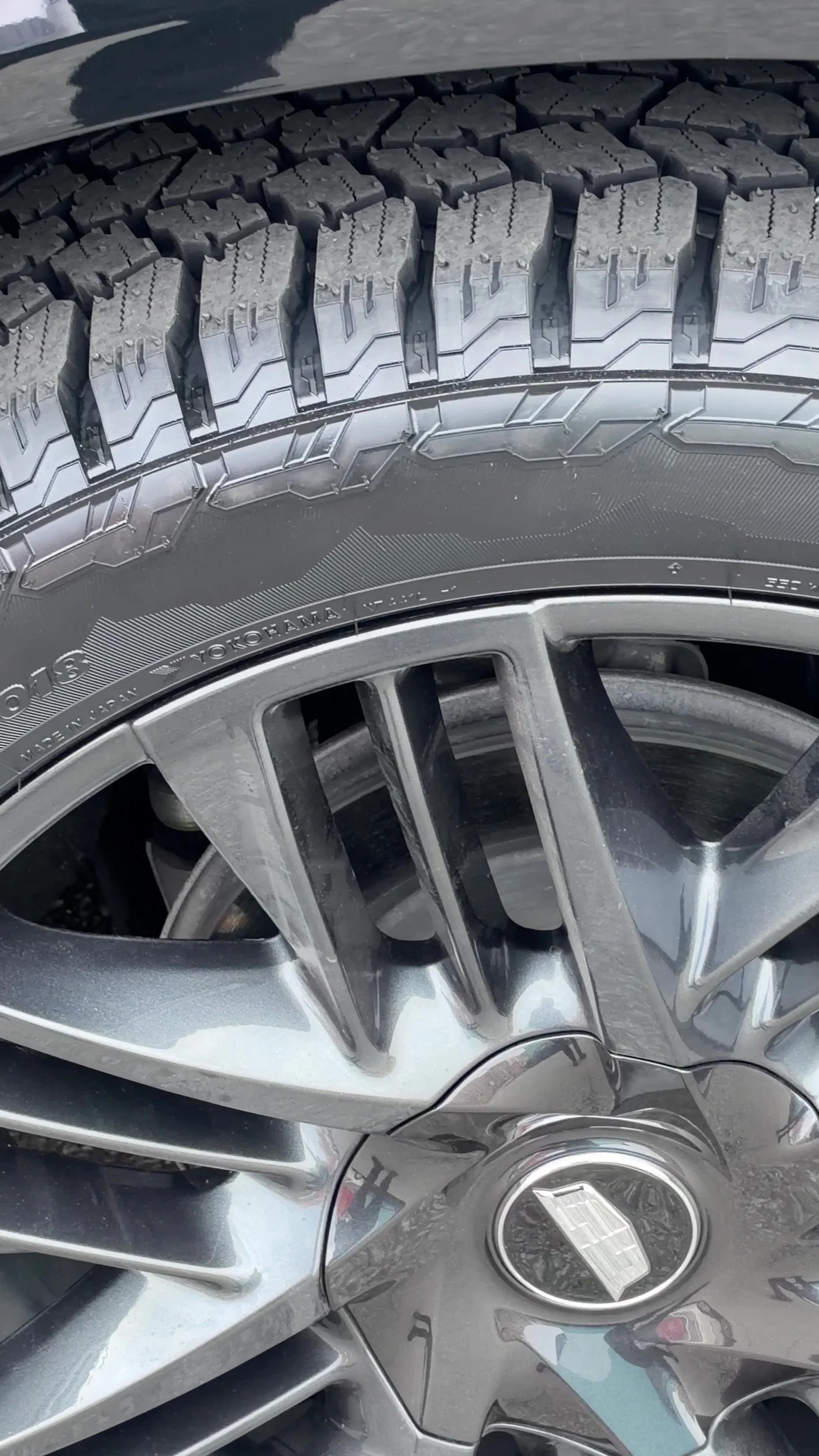
Sipes. Look closely at a winter tire and you'll see hundreds of tiny slits cut into the tread blocks. Those are sipes. They open up as the tire rolls, creating thousands of extra biting edges that grab onto ice and packed snow, and they help squeeze water out from under the tire.
Deeper, chunkier tread. Winter treads are designed to pack snow into their grooves, because snow actually grips snow better than rubber does. Wider channels also push slush away so the tire stays in contact with the road.
That's why we switch when the temperature drops, not when the first snow falls.
What it means when you hit the brakes
In snow testing, winter tires commonly stop around 30% shorter than all-seasons. In one test from 60 km/h, the winter-tire car stopped in about 18 metres, while the all-season car needed about 27. (Performance Plus Tire)
Nine metres is roughly two car lengths. On a dark, icy corner of the Sea-to-Sky, that's the difference between a smooth stop and a very bad night. Our drivers feel the difference on every winter run, and so do our passengers.
Our policy: we never risk it
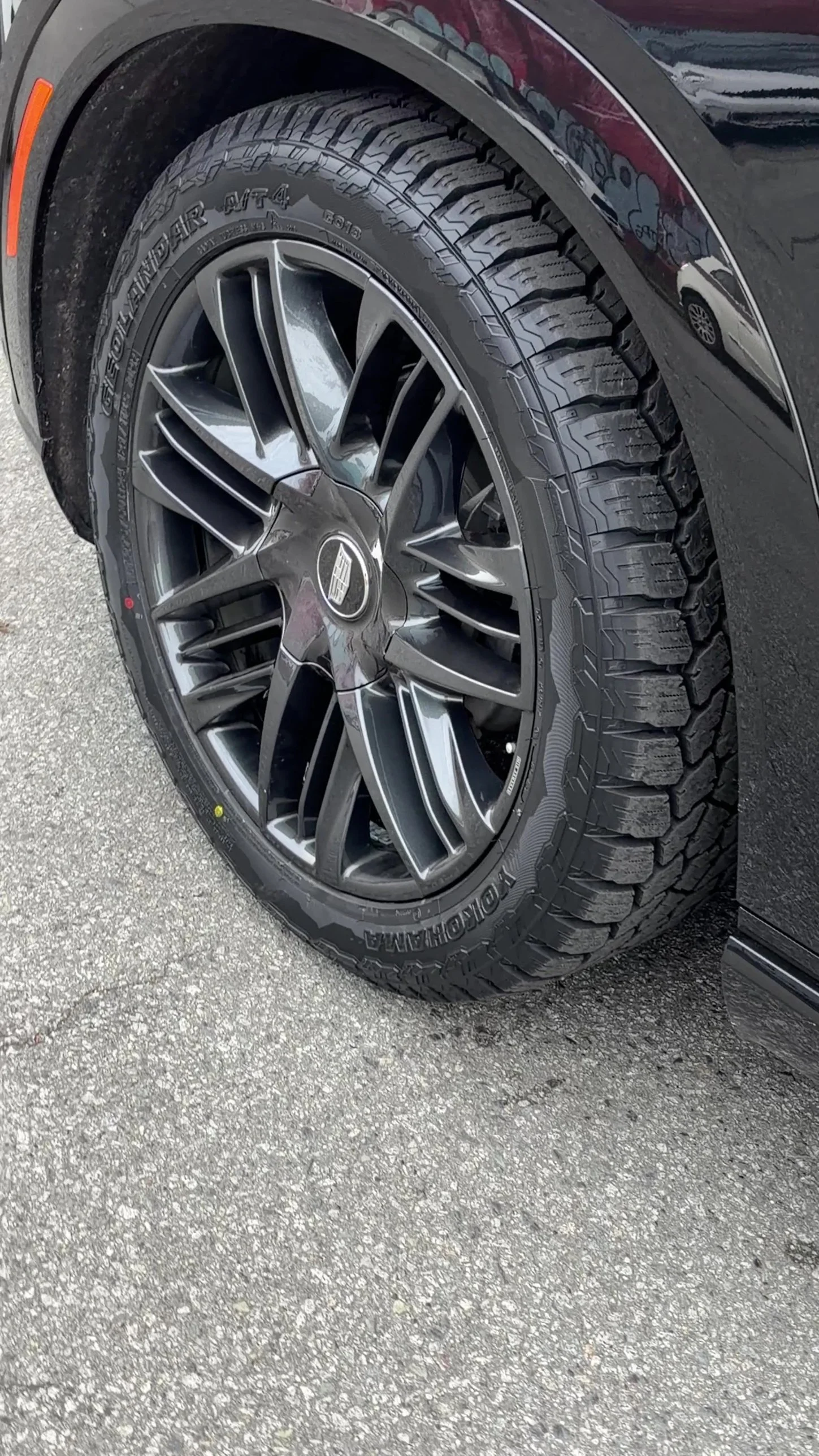
At Limobook, every vehicle, from our Mercedes S580 and Genesis to our Escalade and Mercedes Sprinters, goes on premium mountain-snowflake winter tires for the season. Not M+S all-seasons, and not a "we'll see if it snows" approach. When you book a ride to Whistler, a ski weekend or a late flight in January, the tires under you were chosen for exactly those conditions.
Planning a trip to Whistler this winter? Call us at 604-200-1224 or request a quote at limobook.ca.